Credit Card Stacking for Startups: Smart or Risky? (2026)

Credit card stacking can give qualified startups access to multiple 0% intro APR business cards without giving up equity—but the strategy can backfire fast. Here’s how stacking works, what founders underestimate, and how to decide whether the risk makes sense.

A 0% intro offer can feel like free runway. Stack a few business cards together, and suddenly a startup has cash for product work, cloud bills, contractors, or launch costs without giving up equity.
That’s the appeal. It’s also the danger.
Credit card stacking can work when the numbers are boring, the repayment plan is real, and the founder treats the cards like short-term debt, not found money. It can wreck a credit profile when the stack is built too fast, balances stay high, or the 0% window ends before revenue catches up.
This post is informational only, not financial advice. Card terms change often, and the right move depends on cash flow, credit history, and risk tolerance.
Credit Card Stacking for Startups: At a Glance
What it is | Combining several business credit cards to create a larger pool of available working capital |
Best use | Short-term expenses with a defined repayment source |
Main advantage | Potential 0% introductory APR without giving up equity |
Biggest risk | Carrying balances beyond the promotional period |
Typical underwriting | Often heavily dependent on the founder’s personal credit |
Best for | Founders with strong credit, existing or near-term revenue, and a specific use of funds |
Poor fit for | Startups using debt simply to extend an unproven burn rate |
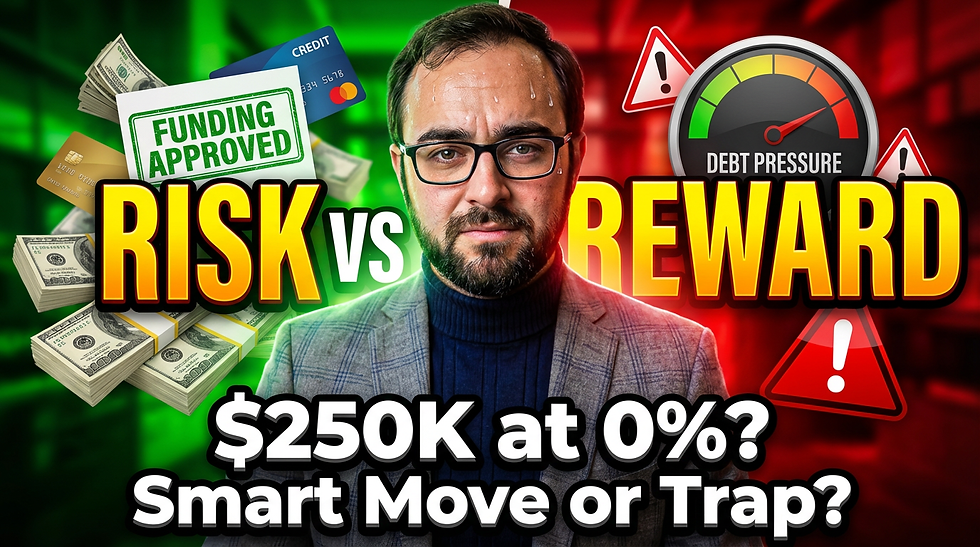
Credit card stacking can be smart startup funding when several 0% APR business cards are used for a specific short-term expense that can be repaid before promotional rates expire. It becomes risky when founders maximize available limits, rely on future fundraising for repayment, or use revolving credit to finance an unresolved cash-flow problem.

What credit card stacking really means
Credit card stacking for startups means applying for several business credit cards, often with 0% introductory annual percentage rate offers, then using the combined credit limits as working capital.
For example, a founder might get approved for four cards with limits of $20,000, $35,000, $25,000, and $40,000. That creates $120,000 of available credit. If those cards offer 0% interest for a set intro period, the founder could use part of that amount without paying interest during that window.
That sounds simple, but the real game is matching short-term debt to short-term uses.
Good uses tend to have a clear payback path:
Paying annual software bills at a discount
Covering cloud costs while a signed customer ramps up
Funding a short contractor sprint tied to a product release
Buying equipment or tools that replace higher monthly costs
Bridging a clear accounts receivable gap
Bad uses tend to be vague:
“Growth”
Hiring without enough revenue visibility
Covering burn with no plan to cut costs
Paying old cards with new cards
Extending a business model that still doesn’t work
That line matters because credit cards are not patient capital. A venture investor may wait years. A card issuer will expect minimum payments every month, and the interest rate after the intro period can be painful.
The best credit card stacking strategies start with one question: what exact cash flow will pay this back before the promo period ends?The reward is real, but it’s narrow
For a SaaS company, the rewards can be practical. Non-dilutive capital means the cap table stays cleaner. Fast approval can matter when a small team needs to ship now, not six months after a financing process. Business cards also come with expense tracking, rewards, purchase protections, and sometimes higher limits than personal cards.
Used carefully, 0% interest business credit cards can be cheaper than many other short-term funding options. Merchant cash advances and some online loans may carry high costs. Equity can be even more expensive if the company grows.
There’s also a speed advantage. A bank loan may require tax returns, profit history, collateral, or years in business. Many early-stage startups do not have those yet. Business cards often rely heavily on the founder’s personal credit, income, and stated business revenue.
That’s why card stacking gets discussed alongside creative startup financing. It sits in the gap between bootstrapping, angel checks, grants, revenue-based financing, and bank loans.
But there’s a catch that doesn’t show up in the pitch. Most stacks are personally guaranteed. That means if the startup can’t pay, the founder may still be on the hook.
The reward is cheap, fast capital. The risk is turning a company cash problem into a personal credit problem.

The main risks founders underestimate
The danger isn’t only the interest rate. It’s the chain reaction when several small credit decisions pile up at once.
Risk | Why it matters | What to do before applying |
|---|---|---|
High balances | Credit scoring models weigh balances heavily. myFICO’s education materials list payment history and amounts owed as the two largest score factors. | Plan to use only part of each limit, not the full stack. |
Too many applications | Hard credit checks can lower scores for a time. Several at once may raise lender concerns. | Space applications and stop if approvals weaken. |
Intro period cliff | After the 0% window, the regular rate applies. That rate is often much higher than a bank loan. | Build a payoff calendar before spending. |
Personal guarantee | Many business cards can still affect the founder personally if payments are missed. | Read the agreement and assume personal risk exists unless confirmed otherwise. |
Cash flow mismatch | Monthly minimum payments continue even if customers pay late. | Keep cash reserves for at least a few months of payments. |
Reward chasing | Points feel good, but they can distract from payback risk. | Treat rewards as a bonus, not the reason to borrow. |
The biggest mistake is maxing out the stack right away. Even if every payment is on time, high use of available credit can hurt a credit score. That matters because a weaker score can make the next round of financing harder, whether it’s another card, a line of credit, or even a founder’s personal mortgage.
Another common mistake is assuming business cards never report to personal credit bureaus. Some issuers report only negative activity, some may report more, and policies vary. If the founder personally guarantees the cards, late payments can still become a personal issue.
Then there’s the emotional risk. A $100,000 stack can make a startup feel better funded than it really is. But available credit is not revenue. It’s a timer.
A smarter sequence for building the stack
The order of applications matters. The goal is not just to get the most credit. The goal is to get enough credit while keeping the profile clean.
Start with your credit file before you start with cards
Before applying, check personal credit reports for errors. In the United States, AnnualCreditReport.com is the official site for free credit reports. Look for wrong balances, old accounts that should be closed, or late payments that do not belong.
Then review existing card balances. If personal cards are already near the limit, applying for business cards may be harder. Paying balances down first can help because lenders care about how much available credit is already being used.
Apply while the profile is strongest
The first round of applications should happen before the startup takes on other debt, misses payments, or shows stretched cash flow. Issuers see the cleanest version of the applicant first.
A common approach is to apply for a small group of cards close together, then pause. Some founders prefer this because issuers may not yet see every new account reporting. Others prefer spacing applications to reduce pressure on the credit file. There’s no universal best answer, and issuer rules differ.
The safer path looks like this:
Pick cards based on intro period, fees, expected limits, and repayment terms.
Apply for the highest-fit cards first, not the flashiest rewards cards.
Stop after approvals are enough to cover the specific funding need.
Avoid applying again just because more credit might be available.
This is where paid stacking services enter the conversation. Some founders read business credit stacking reviews or look for a fundandgrow alternative because they want help choosing cards and timing applications. That can be useful if the service is transparent about fees, risks, and realistic approval odds. Be careful with anyone promising guaranteed funding or pushing more debt than the business can repay.
Separate business and personal spending right away
Mixing spend creates tax headaches and weakens the whole point of business credit. Use the stack only for business expenses tied to the planned use case.
Good rules help:
One card for software and subscriptions
One card for cloud and infrastructure
One card for contractor or vendor payments
One card held back for backup liquidity
This also makes it easier to see which spending is producing results. If a card funded a sales tool or onboarding project, the revenue impact should be visible later.

How to manage the stack without hurting your score
Once approved, the work starts. Getting the credit is the easy part. Managing it is what protects the founder.
Keep credit use low enough to breathe
Using every dollar of available credit is risky. A lower balance gives the company room if a customer pays late or a card issuer lowers a limit. It can also reduce pressure on the credit score.
There’s no magic percentage that works for every credit profile, but lower use is generally better. If a startup gets approved for $120,000, it may be smarter to use $40,000 to $60,000 than to spend the whole amount.
Build the payoff plan before the first swipe
The cleanest plan works backward from the end of the intro period.
Say the stack funds $60,000 in costs, and the shortest 0% period ends in 12 months. That means the company needs a plan to pay $5,000 per month, or a clear lump-sum source before the rate jumps. Minimum payments won’t be enough if the goal is to avoid interest.
A simple tracker should include:
Card name or nickname
Credit limit
Current balance
Minimum payment
Statement date
Due date
Intro period end date
Regular interest rate after the intro
Planned payoff date
Set autopay for at least the minimum payment. Then schedule a separate manual payment plan for the real payoff amount. Autopay prevents late fees. It does not solve the debt.
Keep cash for taxes and payroll
Credit cards can mask cash problems for a while. Payroll, taxes, and critical vendor bills need priority. Running a stack while missing tax payments is a bad trade because tax debt can become harder to manage than card debt.
For SaaS teams, this usually means being honest about recurring revenue quality. Monthly recurring revenue is only useful if churn, payment failures, and support costs are under control. If revenue is volatile, keep the stack smaller.
Don’t let rewards drive spending
Rewards are nice. They’re not the strategy.
A 2% reward on $50,000 is $1,000. That’s helpful, but it’s tiny compared with interest charges if the balance survives past the promo window. Spend because the business case works, not because points make the purchase feel cheaper.
Have a fallback before you need it
If the stack won’t be paid off in time, look for options early. Waiting until the final month weakens choices.
Possible exits include:
Paying down the highest-rate balance first
Moving debt to a lower-cost business line of credit, if approved
Cutting burn so monthly cash can attack the balance
Using customer prepayments, if the discount makes sense
Raising a small bridge round, if equity is still the better trade
Balance transfers can help in some cases, but fees and new rates matter. Read the terms carefully.
Credit Card Stacking vs Other Startup Funding
Credit card stacking is not automatically the cheapest or best capital. Its advantage is speed + temporary 0% APR + no equity dilution. Its weakness is the short repayment clock.
Funding option | Cost | Equity dilution | Speed | Best use |
0% credit card stack | Potentially low during intro period | None | Fast | Short-term, defined expenses |
Business line of credit | Interest on borrowed balance | None | Moderate | Recurring working-capital needs |
Term loan | Fixed borrowing cost | None | Slower | Larger predictable investments |
Revenue-based financing | Usually higher than bank debt | None | Fast–moderate | Businesses with recurring revenue |
Equity funding | No scheduled repayment | Yes | Usually slow | Long-term, uncertain growth |
Bootstrapping | No financing cost | None | Limited by cash | Controlled early growth |
When credit card stacking makes sense, and when it doesn’t
Credit card stacking makes the most sense when the company has a short, specific funding need and a believable repayment source.
It may fit when:
Revenue already exists
The spend is tied to a clear return
The founder has strong personal credit
The stack funds months, not years, of runway
The company can pay more than the minimum each month
It’s a poor fit when:
The startup has no path to revenue
Existing cards are already high
The founder needs the debt for basic living costs
The team is using cards because every other lender said no
The plan depends on raising money later
That last point matters. “We’ll pay it off after the seed round” is not a repayment plan. Funding rounds can take longer than expected, fall apart, or close on worse terms. Card issuers still want payment on time.
Credit card stacking isn’t automatically smart or reckless. It’s a tool with sharp edges. The startups that use it well are usually the boring ones, at least financially. They know the exact use of funds, cap their spending, track every due date, and pay the stack down before the teaser rate expires.

FAQ
Can a startup really get hundreds of thousands through credit card stacking?
Some founders can, especially with strong credit, income, and business history. But high approvals are not guaranteed. Many startups will qualify for much less, and taking the full amount can be risky even when approved.
Do business credit cards affect personal credit?
They can. Many business cards require a personal guarantee. Some issuers report certain activity to personal credit bureaus, especially missed payments. Read the card agreement before assuming the debt stays separate.
Is credit card stacking better than raising equity?
It depends on the use case. Cards can be cheaper if the balance is paid during the 0% period. Equity may be safer if the business needs long-term runway and cash flow is uncertain.
How many cards should a founder apply for at once?
There’s no perfect number. A safer approach is to apply only for enough cards to fund a specific plan, then stop. Too many applications can hurt approval odds and add repayment stress.
What’s the biggest mistake with card stacking?
Spending the full available limit without a payoff plan. The 0% period ends, regular interest begins, and the stack can quickly become expensive.
The takeaway
Credit card stacking can be smart funding when it buys a clear, short-term result and gets paid off on schedule. It becomes a risky move when it’s used to hide weak revenue, extend burn, or chase a larger credit limit for its own sake.
If the stack has a job, a budget, and a payoff date, it can give a startup room to move. If it only creates the feeling of runway, it’s probably debt wearing a nicer jacket.


Comments