AI Follow-Up Automation: The System That Saves Dead Leads From the Graveyard

Updated: 2 days ago
Most leads don’t buy the first time. They go cold, get ignored, and end up buried in the CRM graveyard. AI follow-up automation changes that by sending smart, timely messages that re-engage prospects automatically — helping turn forgotten leads into real revenue opportunities without manual babysitting.

Most leads do not die because they said “no.”
They die because nobody followed up. They filled out the form. They asked about funding. They replied once. They booked a call and ghosted. They needed to upload bank statements, send documents, review options, check with a partner, or “circle back next week.”
Then they disappeared into the CRM graveyard — not because the opportunity was worthless, but because the follow-up system was weak.
AI follow-up automation fixes that problem by using CRM data, timing, lead behavior, and message triggers to re-engage prospects automatically. Instead of relying on memory, sticky notes, inbox archaeology, or “I’ll get to it later,” AI can help send timely follow-ups, summarize past conversations, personalize outreach, flag buying signals, and route serious leads back to a human.
That matters because revenue does not only come from fresh leads. A lot of it is buried in the old ones.
What Is AI Follow-Up Automation?
AI follow-up automation uses AI, CRM triggers, and message sequences to re-engage leads automatically based on behavior, timing, lead status, and missing actions. It can send personalized emails, texts, reminders, and task alerts so businesses stop losing prospects after one missed call, one forgotten quote, or one incomplete application.
At its simplest, it answers four questions: who needs to hear from us, why did they go cold, what should we say next, and when should a human step in?
That is the part most businesses skip. They buy a CRM, dump leads into it, create a few tags, and call it a pipeline. That is not a pipeline. That is a digital junk drawer with login credentials.
AI follow-up automation turns that mess into a working system. It can look at lead status, last contact date, objection, missing document, deal stage, source, and previous notes, then help trigger the next best action.
For funding brokers, mortgage pros, consultants, agencies, and small business owners, this is not just about convenience. It is about cash flow. Every lead that goes cold because of weak follow-up represents wasted ad spend, missed commission, slower deal flow, and another opportunity left to rot.
Why Dead Leads Are Usually a Follow-Up Problem, Not a Lead Problem
A lead that does not respond today is not always a bad lead.
🤔 Sometimes they got busy.
🤔 Sometimes they were comparing options.
🤔 Sometimes they were embarrassed about their bank statements.
🤔 Sometimes they did not understand the next step.
🤔 Sometimes your first message sounded like it was written by a toaster wearing a sales badge.
This is especially common in business funding and financial services. A borrower may be interested but hesitant.
⚠️ They may need working capital, but they are nervous about terms.
⚠️ They may want to apply, but they have not gathered documents.
⚠️ They may be eligible for one product but not another.
⚠️ They may have been declined before and assume every lender will treat them like a financial crime scene.
So they stall.
Then the broker or business owner gets busy. New leads come in. Follow-up gets pushed down the list. The old lead gets buried under newer conversations.
Congratulations. You now own a haunted CRM.
The fix is not “try harder.” That advice belongs in the motivational dumpster. The fix is to design a follow-up machine that does not depend on your mood, memory, or calendar chaos.
How AI Follow-Up Automation Works
AI follow-up automation works best when it is built around clear pipeline events. A lead enters your system. The CRM captures the source, offer, lead type, and requested outcome. Then your automation assigns the next step based on what the lead did or did not do.
⚡ If they booked a call, they get reminders.
⚡ If they missed the call, they get a reschedule sequence.
⚡ If they started an application but did not finish, they get a completion reminder.
⚡ If they submitted partial documents, they get a missing document sequence.
⚡ If they went silent after reviewing options, they get a re-engagement campaign.
⚡ If they reply with urgency, the system alerts a human.
That is where AI becomes useful: not as a magic robot salesperson, but as an operator that reads context and helps make the next message less generic.
A normal CRM drip might send, “Just checking in. Are you still interested?” That is the beige wallpaper of sales messages.
An AI-assisted follow-up could say,
"Last time we spoke, you were looking for working capital before your next inventory order. You were missing your last three months of bank statements. Still worth reviewing options before that order window closes?”
That message is better because it remembers the situation, references the business need, and gives the lead a reason to respond. This is the difference between automated noise and automated relevance.
The Graveyard Recovery Framework
The best AI follow-up automation system starts with a simple framework. Do not automate chaos. Sort it first.
Step 1: Sort the Dead From the Dormant
Not every old lead deserves the same follow-up.
💡 Some leads are dead because they were never qualified.
💡 Some are dormant because timing was bad.
💡 Some are warm but distracted.
💡 Some should be removed because they opted out, were disqualified, or clearly said no.
Start with four segments: dormant leads, incomplete leads, cold-but-qualified leads, and disqualified leads.
Dormant leads had a real need but stopped responding. Incomplete leads started an action but did not finish it. Cold-but-qualified leads looked like a fit but never moved forward. Disqualified leads should not stay in your sales sequence.
This prevents you from blasting everyone with the same sad little “checking in” email.
Step 2: Diagnose Why the Lead Went Cold
Cold leads usually have a reason.
👉 They did not trust the offer.
👉 They did not understand the next step.
👉 They were missing documents.
👉 They thought the cost was too high.
👉 They were shopping around.
👉 They got denied elsewhere.
👉 They were not ready yet.
👉 They needed approval from a partner.
👉 They were afraid of what underwriting would find.
AI can help by reviewing notes, emails, call summaries, form fields, and CRM stages to identify the likely friction point.
🤝 A lead who says “wait until next month” needs a timing-based follow-up.
🤝 A lead who asked about rates needs a cost-objection follow-up.
🤝 A lead who started an application but never uploaded bank statements needs a missing-action reminder.
Step 3: Restart With Context, Not Desperation
The worst reactivation campaigns smell desperate:
“Hey, just checking in.” “Any updates?” “Still interested?”
That is not follow-up. That is sales necromancy with a weak Wi-Fi signal. A better reactivation message includes context, reason, and an easy reply.
Example:
“Hey Marcus — last time we talked, you were looking for working capital to cover payroll and materials before your next job started. We were waiting on your last three months of bank statements. Still want to see what options may be available, or should I close this out for now?”
Step 4: Use AI to Personalize, Not Hallucinate
Personalization is powerful. Fake personalization is radioactive.
AI should use known facts from the CRM: lead name, business type, last objection, offer type, requested amount, missing document, last contact date, and preferred channel. It should not invent urgency, approval odds, fake lender interest, fake deadlines, or made-up qualification claims.
Bad:
“You are pre-approved for funding and need to respond today.” Better: “Based on where we left off, the next step is completing the document review so we can see what options may fit your current business profile.”
Step 5: Route Hot Replies to a Human
AI follow-up automation should not trap serious prospects in an endless drip campaign. If someone replies with buying intent, they need a human.
Hot reply examples include:
“I’m ready” “What do you need from me?” “How fast can this happen?” “Can we talk today?” “What are my options?” “I uploaded the statements.” “Send the application.”
Those replies should trigger a task, notification, or priority tag inside the CRM. The goal is not to remove humans from the sales process. The goal is to stop wasting human time on manual nudges while making sure real opportunities get attention fast.
Best AI Follow-Up Automation Sequences to Build First
Do not start by automating your entire sales operation. That is how people build a 47-step Zapier jungle and then act shocked when one broken field turns the whole machine into soup. Start with the sequences that protect money.
New Lead Speed-to-Contact Sequence
The first sequence should trigger immediately after a lead fills out a form, books a call, requests funding, downloads a resource, or asks for more information. The goal is simple: acknowledge the lead, confirm the next step, and reduce confusion.
Example email:
“Thanks for reaching out. I saw your request about business funding options. The next step is a quick review of your business profile so we can see what may fit. You can start here: [funding assessment link].”
Missing Document Sequence
For funding brokers, this is one of the most valuable automations. Deals often stall because the borrower does not complete the boring-but-necessary part: bank statements, IDs, business documents, tax returns, processor statements, or bank-link authorization.
Example:
“Hey Dana — your review is still missing the last three months of business bank statements. Once those are uploaded, the file can move to the next step. Want me to resend the upload link?”
No-Response Reactivation Sequence
This sequence is for leads who had a real conversation and then vanished. A basic sequence might look like this: 🌟 Day 1, context reminder. 🌟 Day 3, objection-based follow-up. 🌟 Day 7, helpful resource. 🌟 Day 14, “Should I close this out?” message. 🌟 Day 30, re-entry offer.
The goal is not to annoy people into buying. That is how you become the spam goblin. The goal is to reopen a relevant conversation.
Old Lead Resurrection Campaign
Every CRM has old leads that never got a clean second chance. Run a quarterly dead lead reactivation campaign for leads older than 60, 90, or 180 days. Segment by lead type, then write the campaign around their original need.
Example:
“Hey Chris — you reached out a while back about working capital. A lot can change in a few months, especially with deposits, expenses, and funding eligibility. Still worth taking a fresh look, or has that need passed?”
Referral Partner Follow-Up Sequence
Follow-up automation is not only for borrowers or buyers. It is also for referral partners. A lot of funding brokers lose partner revenue because they treat referral partners like one-time lead sources instead of relationships.
Example:
“Hey — wanted to send over a quick reminder of the best-fit clients for funding review: business owners with steady revenue, recent bank deposits, and a clear use for capital. If someone in your network is looking, send them here: [partner referral link].”
Build Your AI Stack
Compare the AI tools loan brokers can use for intake, CRM operations, follow-up, research, documents, and deal workflow.

AI Follow-Up Automation for Funding Brokers
Funding brokers have a special kind of follow-up problem. It is not just “buy now.” It is “finish the application, upload documents, connect the bank account, review terms, clarify use of funds, respond before the file goes stale, and do not disappear because you got nervous.”
That means generic sales automation is not enough. A funding broker needs follow-up sequences around deal movement.
Borrower Intake Follow-Up
When someone starts an intake form but does not finish, the system should trigger a reminder.
Example:
“You started the funding review but did not finish the intake. The next step is completing the business profile so we can better understand revenue, time in business, and funding needs. You can continue here: [application link].”
Bank-Link Reminder Automation
Bank-link completion is one of the easiest places for a deal to die. A borrower may not understand why it matters. They may not trust the link. They may get distracted. Your follow-up should explain the purpose clearly.
Example:
“The bank connection helps review recent business deposits and cash flow activity. It does not guarantee approval, but it may help speed up the review process. Want me to resend the secure link?”
Funding Document Collection
This sequence should be based on missing items, not generic reminders. If the CRM says the file is missing three months of bank statements, ask for that. If it is missing ownership information, ask for that. If it is missing a voided check, ask for that.
Prompt example:
“Review this lead record and create a concise follow-up message. Include the missing document, why it is needed, the next step, and a compliance-safe note that review does not guarantee approval.”
Deal Status Updates
Borrowers hate silence. Even if there is no final answer yet, a status update can preserve trust. AI can help schedule and draft these updates, but a human should review anything involving terms, approvals, declines, or sensitive financial details.
Post-Decline Nurture
A decline should not always end the relationship. Sometimes the borrower needs more deposits, better business credit visibility, lower balances, cleaner statements, or more time in business. A post-decline nurture sequence can provide the next best step without pretending every decline is magically fixable.
Eligibility varies. Terms change. Underwriting matters. The robot can help follow up. It cannot turn weak cash flow into a miracle just because someone typed “AI” into the CRM.
Build the Broker Stack
See exactly where AI belongs in a modern funding operation—and where human judgment still needs to own the decision.

AI Follow-Up Automation for Mortgage, Real Estate, and Local Service Leads
The same logic works outside business funding. Mortgage lead follow-up often fails because buyers are early, nervous, rate-sensitive, credit-sensitive, or casually browsing at midnight like Zillow gremlins. A good mortgage lead follow-up system should segment leads by timeline, loan purpose, property status, credit readiness, and last action.
For real estate agents, the sequence might focus on showings, pre-approval, listings, or market timing. For contractors, it might follow up after estimates. For agencies, it might follow up after proposals. For local service businesses, it might follow up after missed calls, quotes, appointments, or abandoned bookings.
Different industry. Same problem. Leads leak when follow-up depends on memory. AI helps patch the leak.
What to Put in Your CRM Before Automating Follow-Up
AI follow-up automation needs structured data. Before you build sequences, clean up the fields that matter.
At minimum, your CRM should track lead name, lead source, lead type, industry, offer or funding need, requested amount or desired outcome, last contact date, last completed step, missing next step, last objection, preferred channel, consent status, lead temperature, owner or assigned rep, and next best action.
If you are a funding broker, add monthly revenue range, time in business, entity type, funding purpose, documents received, documents missing, bank-link status, product fit, decline reason if applicable, follow-up date, and human review required.
This is the boring part. It is also the part that makes the automation work. Bad data creates bad outreach. Good data creates relevant follow-up. The CRM is the kitchen. AI is the cook. If the ingredients are expired, do not blame the chef when dinner tastes like regret.
Dead Lead Reactivation Script Examples
Cold Lead Email
Subject: Still looking at this? “Hey [First Name] — last time we connected, you were looking into [funding/service need]. I know timing changes fast, so I wanted to check whether this is still something you want to review. If yes, the next step is [specific action]. If not, no problem — I can close the loop on my end.”
Cold Lead SMS
“Hey [First Name], quick check — are you still looking into [funding/service need], or should I close this out for now?” Use SMS only when you have appropriate consent and a compliant opt-out process.
Missing Document Reminder
“Hey [First Name] — your file is still missing [document]. Once that is uploaded, the review can move to the next step. Want me to resend the upload link?”
Funding Follow-Up After Silence
“Hey [First Name] — last time we spoke, you were looking for [amount/use of funds]. We were waiting on [missing action]. Still worth reviewing options, or has the timing changed?”
Referral Partner Nudge
“Hey [First Name] — quick reminder: the best-fit referrals are usually business owners with steady revenue, recent bank deposits, and a clear use for capital. If someone comes to mind, send them here: [referral link].”
Keep Humans in Control
Map the checkpoints where automation should hand the deal back to a human before speed turns into risk.
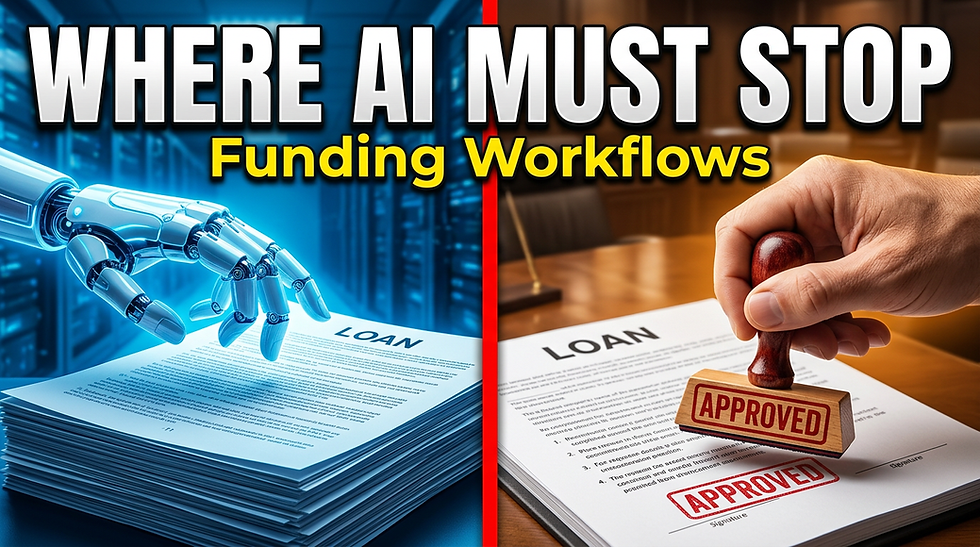
What AI Can and Cannot Do in Follow-Up
AI can help you move faster. It can draft emails, write SMS messages, summarize CRM notes, segment leads, recommend next actions, identify missing documents, trigger reminders, flag urgent replies, and help keep leads from disappearing into the void.
But AI cannot replace judgment. It cannot guarantee funding approval. It cannot make underwriting decisions. It cannot determine legal compliance for every outreach scenario. It cannot fix a bad offer. It cannot make an unqualified lead qualified. It cannot invent facts to make a message sound more persuasive. It cannot build trust if your actual process is sloppy.
AI follow-up automation is not a magic revenue button. It is a system for reducing leakage. It helps make sure the right person gets the right message at the right time with the right next step.
Stop Losing Good Leads
See how AI-powered follow-up turns missed messages, stalled conversations, and forgotten prospects into an actual revenue recovery system.

How AI Follow-Up Automation Connects to Cash Flow
Lead follow-up is a cash flow problem wearing a sales costume. If you paid for the lead, weak follow-up wastes ad spend. If you are a broker, weak follow-up kills commission. If you are a consultant, weak follow-up buries proposals. If you are a contractor, weak follow-up loses estimates. If you are an ecommerce seller, weak follow-up can kill wholesale, vendor, or financing conversations.
If you run a funding agency, weak follow-up turns your CRM into a museum of almost-money. That is why AI follow-up automation belongs inside finance operations.
It helps protect pipeline value, recover missed opportunities, keep borrowers moving through document collection, keep referral partners active, and help business owners stop relying on heroic memory and start building a system. Because cash flow does not care that you were busy. The bills still arrive with religious discipline.
What to Do Next
Start with one sequence. Do not automate your entire business in one weekend unless your hobbies include confusion, broken webhooks, and yelling at browser tabs.
Pick the follow-up leak that costs you the most money. If you are a funding broker, start with missing documents or bank-link reminders. If you are a mortgage pro, start with speed-to-contact and long-term nurture. If you are a consultant or agency owner, start with proposal follow-up. If you are a local business, start with missed calls and quote follow-up.
Then build the system: capture the lead, tag the stage, identify the missing action, write the sequence, add AI personalization, set human handoff rules, track replies, and improve the messages.
That is the machine. Not hype. Not magic. Not another AI tool roundup written by someone who thinks “pipeline” is something under the sink. A real follow-up system.
If your CRM is full of cold leads, old opportunities, half-finished applications, and prospects who vanished after one conversation, start by cleaning up the graveyard.
Then bring the useful ones back.
Want the follow-up machine without duct-taping your CRM together at midnight? Download the Funding Agency Automation Pack and start building a cleaner broker follow-up system that keeps every deal moving toward a next action.

Frequently Asked Questions
What is AI follow-up automation?
AI follow-up automation uses AI, CRM triggers, and message sequences to re-engage leads based on timing, behavior, lead status, and missing actions. It can help send personalized emails or texts, create reminders, summarize prior conversations, and route serious replies back to a human.
Can AI follow-up automation recover cold leads?
Yes, it can help recover cold or dormant leads when the original need still exists and the follow-up uses relevant context. The strongest systems segment leads by why they went cold, then send a useful next step instead of repeating generic “just checking in” messages.
What should funding brokers automate first?
Funding brokers should usually start with high-leakage workflows such as new-lead speed-to-contact, incomplete applications, missing-document reminders, bank-link reminders, no-response reactivation, appointment reminders, and referral-partner follow-up. These sequences protect pipeline value without handing sensitive funding decisions to AI.
Should AI send every follow-up without human review?
No. AI is best used for repetitive follow-up, context gathering, drafting, routing, and reminders. Human review should remain involved when messages discuss approvals, declines, pricing, lender recommendations, sensitive borrower information, legal issues, or other decisions where judgment and accountability matter.
What CRM data makes AI follow-up more useful?
Useful fields include lead source, lead type, last contact date, last completed step, missing next step, last objection, preferred channel, consent status, lead temperature, assigned owner, and next action. Funding brokers may also track revenue range, time in business, documents received, bank-link status, product fit, and decline reason.
Can AI follow-up automation send SMS messages?
It can support SMS follow-up when the business has appropriate consent and a compliant opt-out process. The automation should use verified CRM facts, avoid unsupported approval or urgency claims, and hand off sensitive or high-intent conversations to a person.
Additional Resources
AI for Business Loan Brokers: What to Automate, What to Keep Human, and What Can Get You in Trouble
AI Customer Follow-Up for Small Business: Turn Missed Messages Into Revenue Before They Rot
Human-in-the-Loop AI Funding Workflows: Where Automation Must Stop
AI Agents for Finance Operations: From Alerts to Action Without Letting the Robot Drive Drunk


Comments